
The short answer: A hard loft is a home inside a converted industrial or commercial building, with original concrete, brick, timber and big factory windows. A soft loft is newer construction designed to look like a loft, with high ceilings and open layouts but modern systems and amenities. Live/work describes how a unit is legally permitted, not how it looks: a loft where you can live and regularly run a business from the same space. In Downtown LA, a loft can be a hard loft and live/work at the same time.
If you've browsed Downtown LA rentals for more than five minutes, you've seen all three terms, often used loosely. Knowing the difference changes what you pay, what you get, and what you're allowed to do in your home. Here's how they compare.
What Is a Hard Loft?
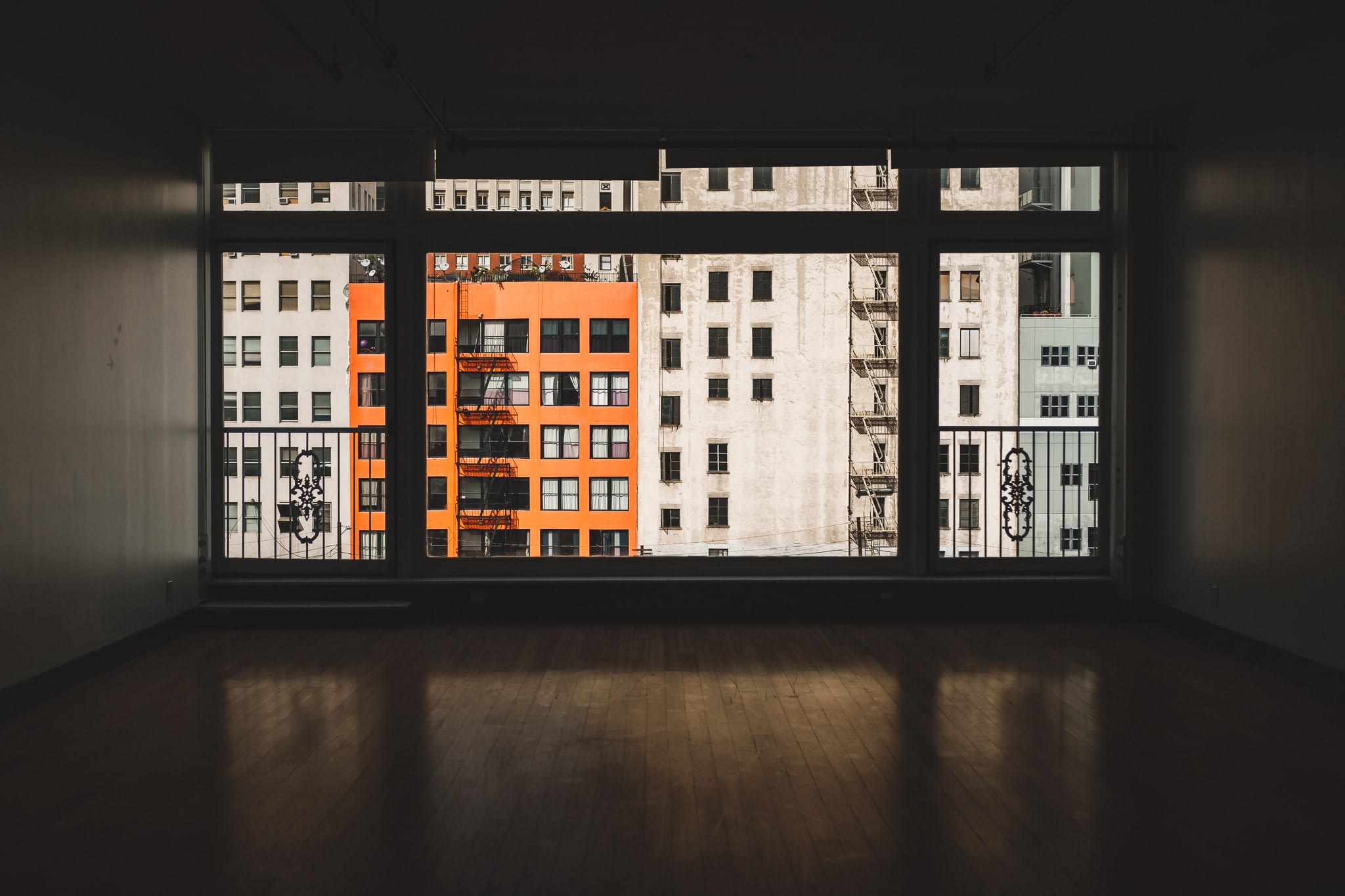
A hard loft is the real thing: a residence carved out of a building that was originally built as a factory, warehouse, bank, office or department store. Downtown LA has one of the largest collections of hard lofts on the West Coast, thanks largely to the city's 1999 Adaptive Reuse Ordinance, which made it far easier to convert vacant historic buildings into housing.
What you can expect in a DTLA hard loft:
The trade-offs are real, though. Older buildings can mean single-pane windows, louder units, higher heating and cooling bills, limited parking, and fewer resort-style amenities. And because no one is building new 1920s factories, the supply of hard lofts is fixed, which keeps the best ones in high demand.
Hard Lofts to Know in DTLA
What Is a Soft Loft?
A soft loft delivers the loft look in a building that was designed as housing from day one. You'll still find tall ceilings, oversized windows, open plans and industrial touches like exposed ductwork or concrete, but they're design choices rather than history.
Why renters choose soft lofts:
What you give up is the character and the story. A soft loft can feel polished and convenient; a hard loft feels one of a kind.
Modern Lofts and Loft-Style High-Rises to Know in DTLA
What Is a Live/Work Loft?
"Live/work" isn't a style. It's a legal designation. In Los Angeles, many converted buildings are permitted as Joint Living and Work Quarters, which the city's building code defines as a residence with adequate workspace that is regularly used by the people who live there.
That designation is why Downtown LA became a magnet for artists, designers, photographers, architects and small business owners. But live/work comes with rules worth understanding before you sign:
Neighborhoods with the most live/work inventory: the Arts District, the Fashion District and the Historic Core.
Why So Many DTLA Lofts Have Mezzanines
Under the city's Adaptive Reuse Ordinance, a mezzanine that covers no more than a third of the floor area below it isn't counted as new floor area. That rule made sleeping lofts and second-level platforms an easy way to add usable space, which is why two-level lofts are so common in converted buildings Downtown. If a separate sleeping area matters to you, a mezzanine loft can give you bedroom privacy without giving up the open, high-ceilinged main floor.
Hard Loft vs. Soft Loft vs. Live/Work at a Glance
| Hard Loft | Soft Loft | Live/Work | |
|---|---|---|---|
| What it is | Converted industrial or commercial building | New construction with a loft design | A legal permit type |
| Character | Original brick, concrete, timber, history | Modern, loft-inspired finishes | Either hard or soft |
| Amenities | Often limited | Usually extensive | Depends on building |
| Energy costs | Often higher | Usually lower | Depends on building |
| Run a business from home | Only if permitted | Usually home-office only | Yes, within the rules |
| Best for | Character and space seekers | Convenience and amenity seekers | Creatives and business owners |
Which Type of Loft Is Right for You?
Not sure? Many renters tour one of each before deciding. Seeing the difference in person usually settles it in a single afternoon.
Frequently Asked Questions
Is a hard loft more expensive than a soft loft?
Not always, but the best hard lofts often rent at a premium because supply is fixed. Soft lofts may cost more upfront for amenities but less in utilities. For current numbers, see our guide to the real cost of living in a DTLA loft.
Can I run a business from any loft in Downtown LA?
No. Only units permitted as live/work allow a business that's more than a typical home office. Always confirm the designation with the landlord or your agent before signing.
Are all Arts District lofts live/work?
Many are, but not all. The Arts District has hard lofts, newer soft lofts and standard apartments, so check each listing.
What does "adaptive reuse" mean?
It's the conversion of an older non-residential building, such as a factory or office tower, into housing. Most DTLA hard lofts are adaptive reuse projects.
Do I need a special application for a live/work loft?
Usually it's the same application as any DTLA rental, but some landlords ask what business you'll run. Our DTLA loft renter's checklist covers what to have ready.
Find Your Downtown LA Loft
Whether you want century-old brick, a sleek South Park high-rise or a legal live/work studio, the right loft depends on how you live and work. As a Downtown LA leasing specialist, I help renters sort hard lofts from soft lofts, confirm live/work permits, and get ahead of the competition on the best units.
Browse current DTLA lofts for rent or call or text (213) 808-4324 to schedule a tour.